

Overview
Flashcards have been a cornerstone of self-directed learning for over a century. From medical students drilling anatomy terms to language learners memorizing vocabulary, the simple question-and-answer format remains one of the most effective study techniques available. But in recent years, a wave of AI-powered flashcards and smart flashcards apps has reshaped how active recall works in practice, promising smarter review sessions and less wasted study time. The scale of this shift is significant: the AI-generated personalized flashcard market was valued at $1.98 billion in 2024 and is projected to reach $8.62 billion by 2032, growing at a compound annual growth rate of over 20%.
The choice between AI flashcards vs. traditional flashcards is not always straightforward. Each approach has meaningful advantages depending on the subject matter, the learner's goals, and their study environment. AI-powered platforms can process enormous volumes of material and schedule reviews at scientifically optimal intervals using spaced repetition algorithms. Traditional flashcards, by contrast, offer a tactile, distraction-free experience that many learners find irreplaceable—especially those who prefer paper flashcards for deep encoding and focused study.
Adoption of digital flashcard apps among students has surged, particularly in demanding fields. A 2025 survey of first-year medical students at the University of Central Florida found that 94% identified as Anki users, with nearly 88% believing the tool significantly contributes to their success in course modules. In this guide, we compare AI flashcards vs. traditional methods across the dimensions that matter most, flashcard creation, spaced repetition, personalization AI capabilities, cost, portability, and actual learning outcomes, so you can decide which method, or combination of methods, is right for you.
Key Differences at a Glance
Before diving into a detailed AI study tools comparison, here are the most important distinctions when you compare AI flashcards against traditional alternatives.
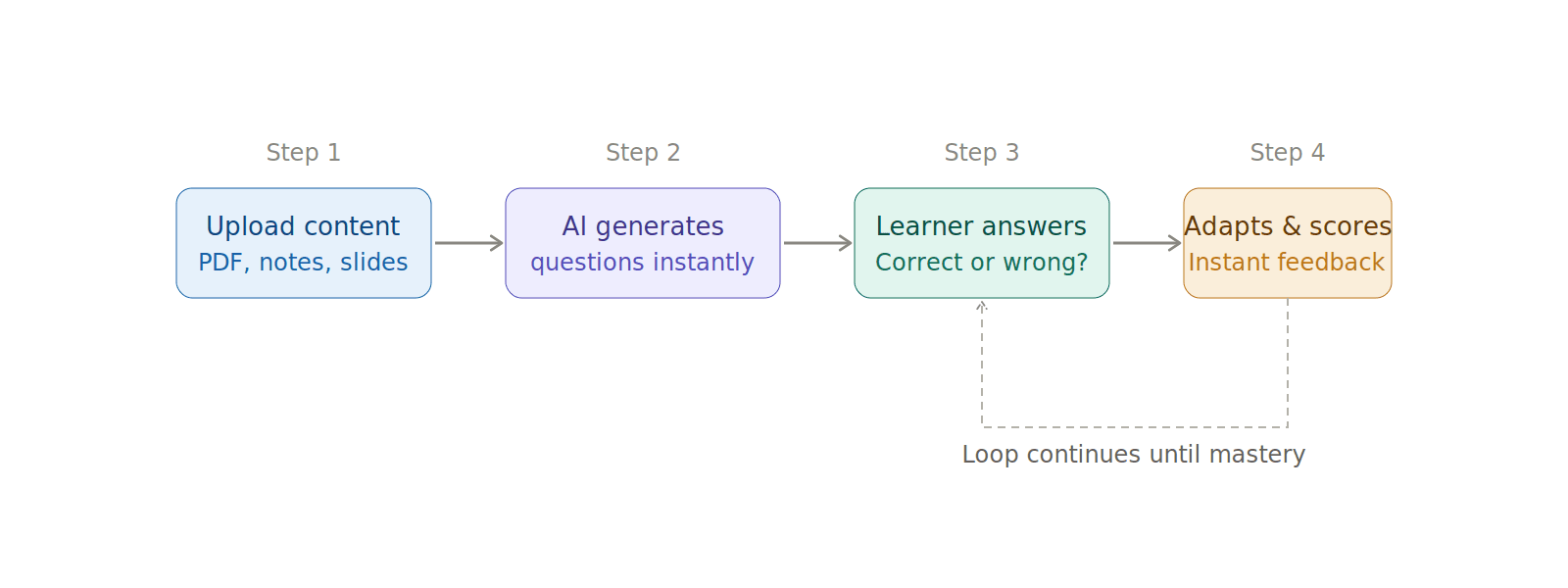
AI flashcards auto-generate content from notes, PDFs, or lectures and use algorithm-driven spaced repetition that adjusts intervals based on your performance. These AI flashcard features include adaptive learning that modifies difficulty, order, and frequency based on your individual data. They sync across all your devices, support multimedia like images, audio, and diagrams, and provide detailed analytics dashboards. Traditional flashcards are handwritten or typed manually, rely on the learner to manage their own review schedule, and require self-assessment to sort cards by difficulty. Paper flashcards cost only pen and paper, work without electricity or Wi-Fi, and offer a focused offline experience with no notifications competing for your attention.
AI-powered flashcards are generally best for high-volume study, standardized exams, and language learning at scale. Traditional flashcards excel at deep encoding, conceptual learning, and distraction-free environments. Many students ultimately find that the digital vs paper flashcards debate is best resolved by using both methods strategically.
Content Creation
AI Flashcards
One of the most compelling AI flashcard features is the speed at which study materials can be created. Modern online flashcard tools like Quizlet, Anki (with add-ons), and newer entrants like Remnote and Wisdolia allow users to upload lecture slides, paste in textbook passages, or even record audio and the AI can generate flashcards in complete decks within seconds. This textbook to flashcard conversion process is transformative for content-heavy disciplines. If you want to try this yourself, our AI Flashcard Generator can turn any notes or text into a ready-to-study deck instantly. In August 2025, Quizlet announced a series of AI-powered enhancements including adaptive learning modes, personalized learning home feeds, and community study groups, reporting that 82% of students achieve A's after using its Learn feature. In February 2026, Quizlet further expanded its AI capabilities by acquiring Coconote, an app that converts audio and video recordings into flashcards, quizzes, and study games. AI textbook summarization like this is transformative for students in medicine, law, or engineering, where the time investment of manually creating hundreds of cards can consume hours that could be spent reviewing.
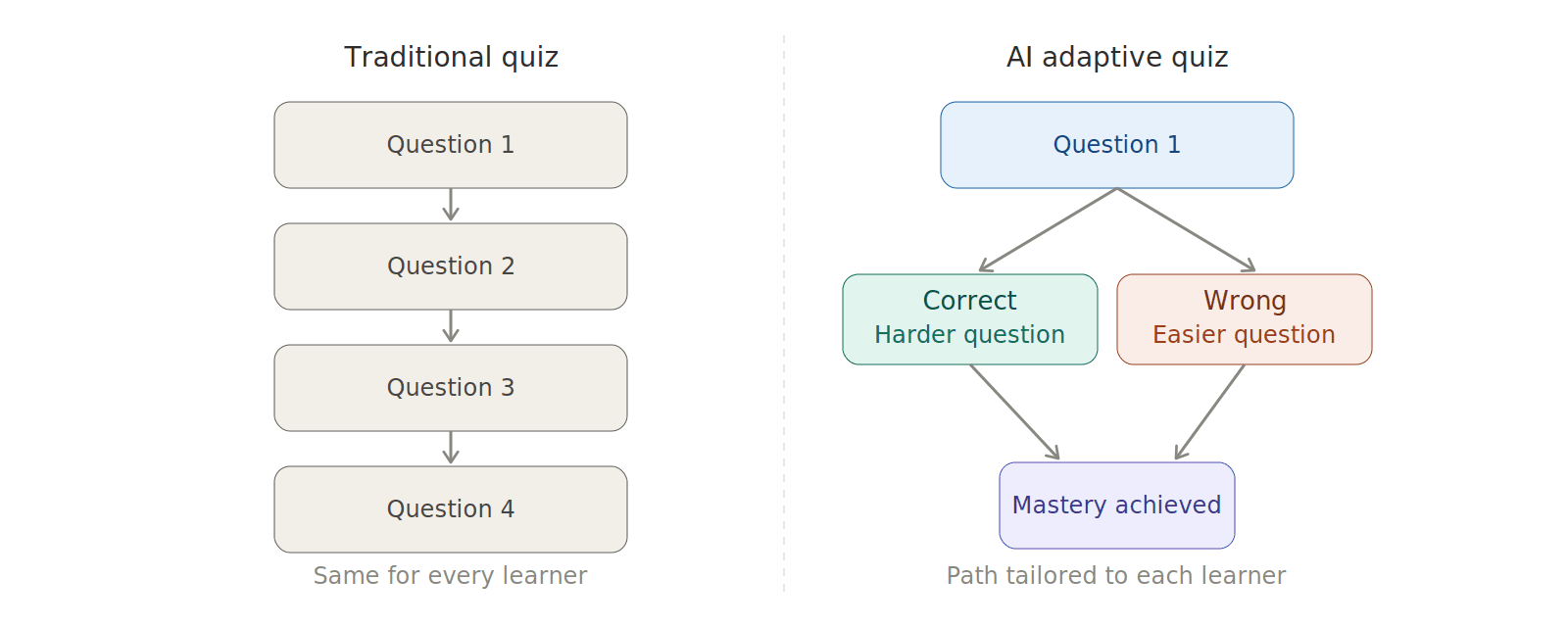
AI-generated flashcards are also editable, meaning learners can refine the language, add context, or merge related concepts. The AI efficiency of this process is significant: some platforms allow collaborative deck creation and pre-made decks sharing, so a study group can pool their effort and create flashcards far faster than any individual could alone. Many free AI flashcard tools include community libraries with thousands of pre-made decks covering popular subjects.
Traditional Flashcards
The manual process of creating traditional flashcards is often cited as a disadvantage, but the benefits of manual creation go deeper than they first appear. Cognitive science tells a more nuanced story. The act of handwriting a paper card—deciding what to include, condensing information into a concise question-and-answer pair, and physically forming the letters—engages multiple cognitive processes simultaneously. A high-density EEG study published in Frontiers in Psychology found that handwriting produced far more elaborate brain connectivity patterns than typing, with widespread theta/alpha coherence in parietal and central brain regions crucial for memory consolidation. Research on the "generation effect" further suggests that producing material from memory through active recall, rather than passively reading it, strengthens the memory trace.
In other words, the time investment you spend on DIY vs AI flashcards is not wasted preparation—the card creation process is part of the learning itself. For conceptually demanding material where deep understanding matters more than rote recall, this hands-on process and its cognitive benefits for learning can be more effective than importing a pre-built deck. These traditional flashcard benefits make paper cards especially valuable for subjects requiring synthesis and critical thinking.
Spaced Repetition
AI Flashcards
Spaced repetition—the practice of reviewing material at increasing intervals over time—is one of the most well-supported study techniques in learning science. AI flashcard apps implement spaced repetition algorithms automatically. When you answer a card correctly, the algorithm pushes it further into the future. When you struggle, the card reappears sooner. Over weeks and months, the system builds a personalized learning schedule that maximizes long-term retention while minimizing total study time.
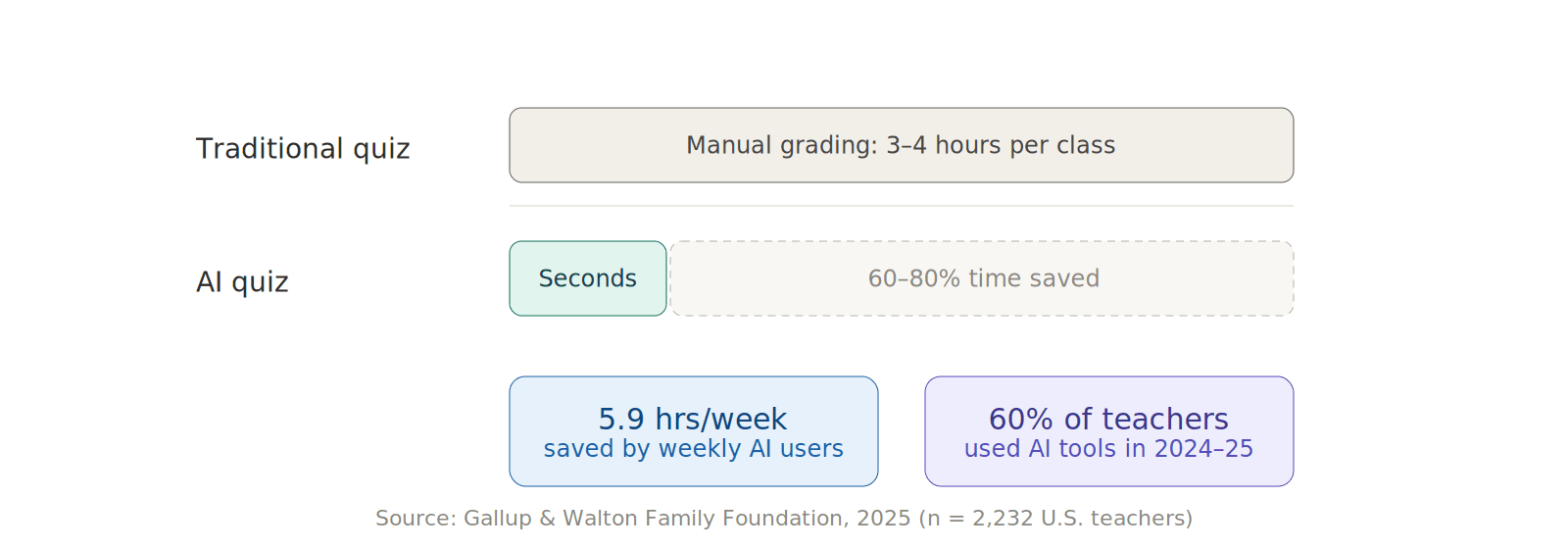
Apps like Anki use the SM-2 algorithm (and its variants), which has been refined over decades of research on spaced repetition. A 2026 meta-analysis published in The Clinical Teacher reviewed 14 scientific studies on flashcards and spaced repetition in medical education and confirmed its effectiveness on learner performance in objective tests. A 2025 study at UNLV's medical school found significant positive correlations between Anki usage metrics - total hours studied, number of matured cards - and Comprehensive Basic Science Exam scores. Newer platforms incorporate machine learning models trained on millions of user sessions to further optimize review timing, creating an adaptive learning experience that adjusts continuously to your changing knowledge state. You can also pair your flashcards study sessions with our Quiz from Text tool to test your recall on the same material through flashcards quizzes in a different format, which research shows can further strengthen long-term memory.
Traditional Flashcards
Traditional flashcard users can implement spaced repetition manually, but it requires discipline and a system. The classic Leitner box method, for example, uses a series of compartments: paper cards answered correctly move to the next box (reviewed less frequently), while missed cards return to the first box (reviewed daily). This approach works, but it places the burden of scheduling entirely on the learner, a key consideration in the AI vs traditional flashcards debate.
In practice, most people who use flashcards in the traditional way do not maintain a rigorous spaced repetition schedule. Without algorithmic tracking, it is easy to over-review material you already know (wasting time) or under-review material you are close to forgetting (losing progress). For learners who are self-motivated and organized, manual spaced repetition can improve retention rates effectively. For everyone else, the automated approach offered by smart flashcards holds a significant advantage.
Personalization
AI Flashcards
AI-powered platforms do more than schedule reviews - personalization AI reshapes the entire study experience based on your performance data. Many apps adjust the difficulty of questions in real time, introduce related concepts when you are ready, and flag knowledge gaps that you may not have identified on your own. Some platforms, such as Brainscape, assign "confidence ratings" to every card and use these ratings to dynamically prioritize your weakest areas. These AI flashcard features support learners with different needs, including flashcards for learning disabilities like dyslexia, where AI dyslexia support through text-to-speech and adjustable formatting can make study sessions more accessible.
For standardized test preparation, where thousands of facts, formulas, and concepts must be internalized within a fixed timeline, this level of personalized learning can be the difference between a passing and failing score. The system identifies your weak points faster than you can, and allocates your limited study time accordingly. Starting in January 2026, the American Board of Family Medicine integrated spaced repetition into its quarterly physician assessments, with research showing that physicians exposed to repeated questions achieved a 58% learning rate compared to 43% in control groups—a clear demonstration of how algorithmic personalization and adaptive learning improve outcomes even for experienced professionals.
Traditional Flashcards
Personalization with physical flashcards depends entirely on the learner's self-awareness and organizational effort. You can sort paper cards into "known" and "unknown" piles, mark difficult cards with a dot or star, and adjust your review frequency based on gut feeling. Some learners thrive with this level of control - they enjoy the metacognitive exercise of assessing their own knowledge through active recall and making strategic decisions about where to focus.
However, self-assessment is prone to well-documented biases. Learners tend to overestimate what they know and underestimate how quickly they forget. Without objective performance data, people who use flashcards traditionally may allocate study time inefficiently, spending too long on comfortable material and not enough on genuine weaknesses. This is one area where the AI vs traditional limitations are most apparent.
Cost
AI Flashcards
The cost of AI flashcards varies considerably across platforms. Anki is free on desktop and Android (the iOS app costs a one-time fee of around $25). Quizlet offers a free tier with ads and limited features, while its Plus plan runs approximately $8 per month in subscription fees. Brainscape, Remnote, and other premium flashcard tools charge between $5 and $15 monthly for full access to AI features, offline mode, and advanced analytics.
For students on a tight budget, the free AI flashcard tools on most platforms offer more than enough functionality for effective studying. The premium features, such as AI card generation, advanced analytics, and ad-free experiences, represent good value for money but are not strictly necessary. Over the course of a four-year degree, a premium subscription could cost between $200 and $700, which is still modest compared to textbook expenses. When evaluating the cost of AI flashcards against their benefits, consider how much time you will save through automated flashcard creation and AI efficiency in your study workflow.
Traditional Flashcards
The DIY flashcard costs are hard to beat. A pack of 100 blank index cards costs between $1 and $5 at most retailers, and a pen is the only other supply needed. For learners who want higher-quality materials, pre-printed cards for specific subjects (anatomy, foreign language vocabulary, bar exam terms) are available, typically ranging from $15 to $40 per set.
The total lifetime cost of a traditional flashcard practice is negligible - often under $30 for an entire academic career. There are no subscriptions, no in-app purchases, and no risk of a pricing change disrupting your study routine. This makes paper flashcards an unbeatable choice for budget-conscious learners seeking value for money in their study materials.
Accessibility and Portability
AI Flashcards
Digital flashcard apps are accessible virtually anywhere, on a phone during a commute, on a laptop in a library, or on a tablet in bed. Most online flashcard tools sync seamlessly across devices, so a study session started on one device can be continued on another. This ubiquity makes it easy to fit short review sessions into idle moments throughout the day, a practice that research shows can be just as effective as longer, dedicated study blocks for improving retention rates.
AI accessibility tools within flashcard apps also offer features that paper cards cannot match, including text-to-speech for visually impaired learners, adjustable font sizes, and multilingual support with built-in translation. For learners with disabilities, these dyslexia-friendly flashcards and other accommodations can make the difference between a usable and unusable study tool. Flashcards for disabilities support has become a key differentiator among the best AI flashcards platforms, making personalized learning available to a broader range of students.
Traditional Flashcards
Physical flashcards are inherently portable that you can slip a rubber-banded stack into a jacket pocket or backpack. However, they are also vulnerable to loss, water damage, and general wear. A student preparing for a major exam may accumulate hundreds or even thousands of paper cards, at which point physical storage and organization become real logistical challenges.
On the other hand, physical flashcards work without electricity, Wi-Fi, or a charged battery. They cannot distract you with notifications. A 2025 systematic review in Educational Technology Research and Development found that technology-related distractors account for roughly 52% of digital distraction causes in education, with personal performance issues representing two-thirds of the consequences. For some learners, the tactile experience of holding, flipping, and sorting paper cards provides a grounding, meditative quality that digital tools lack—one of the most commonly cited traditional flashcard benefits in the digital vs paper flashcards debate.
Retention and Learning Outcomes
The ultimate question is: which method actually helps you improve retention and build long-term memory more effectively? The honest answer is that it depends on how you use flashcards and what kind of learning you are pursuing. For a deeper look at the science of memory consolidation and how different study methods compare, see our guide to the best memorization techniques backed by neuroscience.
AI Flashcards
For sheer volume of information, AI-powered spaced repetition has a strong evidence base from scientific studies on flashcards. Studies on platforms implementing SM-2 and similar spaced repetition algorithms consistently show superior long-term retention compared to massed practice (cramming) or unstructured review. The algorithm ensures that every minute of study time is allocated to the material that needs it most, dramatically improving retention rates across subjects.
The best AI flashcards platforms also excel at maintaining knowledge over long time horizons. The American Board of Family Medicine's large-scale study found that spaced repetition improved both knowledge retention and the ability to transfer learning to different clinical contexts, demonstrating a nearly 6% improvement in knowledge transfer among practicing physicians. Medical students who use flashcards with spaced repetition software throughout their training often report that they can recall material from their first year of study well into residency—something that is far more difficult to achieve with traditional methods. This kind of long-term retention is one of the strongest cognitive benefits of AI learning tools.
Traditional Flashcards
Traditional flashcards have their own evidence base. A 2025 neuroscience review published in Life (Basel) synthesized neuroimaging findings showing that handwriting engages the left fusiform gyrus and superior parietal lobule—regions tied to visual word recognition and spatial processing—more strongly than typing does. These scientific studies on flashcards confirm the unique cognitive benefits of creating paper flashcards by hand.
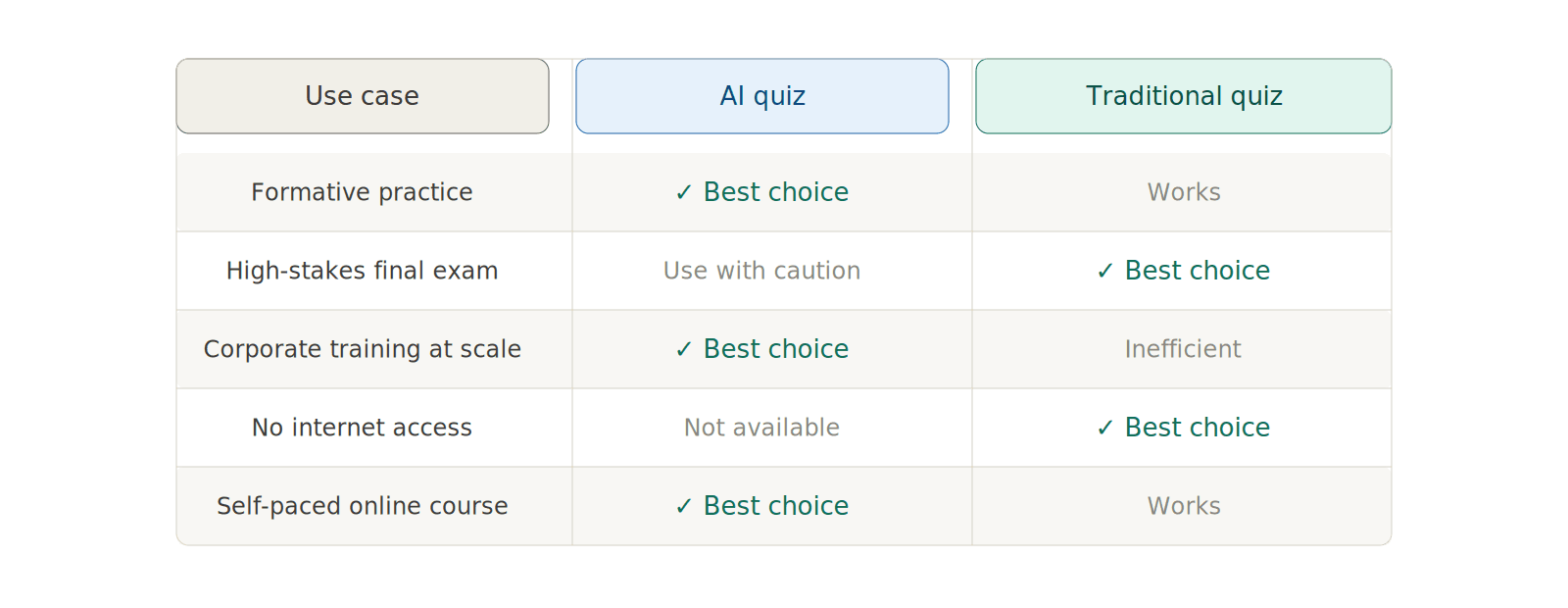
For material that requires understanding rather than recall (conceptual relationships, causal reasoning, argument structures), this deeper encoding through active recall can translate into more durable and flexible knowledge. The learning science behind this is clear: creating cards by hand forces a level of cognitive processing that passive review cannot match.
There is also a motivational dimension that is difficult to quantify. Many learners report that the physical ritual of creating and reviewing paper flashcards feels more satisfying and less fatiguing than staring at a screen. In a world of increasing digital burnout, the analog simplicity of traditional flashcards has real psychological value for long-term memory formation.
Accuracy, Privacy & Ethical Considerations
As AI study tools become more prevalent, learners should consider several important factors beyond raw effectiveness. The accuracy of AI generation is a legitimate concern: AI models generate cards by pattern-matching across uploaded material, which means they can produce technically accurate but pedagogically weak cards - questions that test trivial details while missing core concepts. Always review AI-generated flashcards before committing them to your study routine, and treat automated decks as a strong first draft rather than a finished product.
Data privacy AI considerations are also relevant. When you upload lecture notes, textbook passages, or personal study materials to an AI platform, that data may be processed on remote servers. Review each platform's privacy policy to understand how your content is stored, shared, or used for model training. Copyright AI content is another dimension: if you are uploading copyrighted textbook material for AI textbook summarization or textbook to flashcard conversion, be aware of the terms of service and fair use boundaries.
Ethical AI learning also means understanding the limitations of automated tools. AI vs traditional limitations include the risk of over-reliance on technology - if students never practice the skill of synthesizing and condensing information themselves, they may develop weaker metacognitive abilities over time. A balanced approach to ethical AI learning involves using AI efficiency for volume and speed, while preserving the benefits of manual creation for deep understanding and critical thinking.
Which Is Best for You?
There is no single correct answer in the AI vs traditional flashcards debate. The right tool depends on your learning goals, your subject matter, and your personal study habits. If you are also weighing flashcards against other AI study tools, our detailed comparison of AI quiz generators vs. flashcard generators can help you decide which format fits your exam prep style best.
Choose the best AI flashcards platform if you are studying for a standardized exam with a large volume of factual material, you want automated spaced repetition without the administrative overhead, you need multimedia support (images, audio, diagrams), you study across multiple devices using online flashcard tools, or you are preparing for a professional certification with a fixed deadline where AI efficiency matters most.
Choose traditional flashcards if you are studying conceptual material that benefits from deep encoding and active recall, you find digital devices distracting, you want DIY flashcard costs at zero, you value the meditative quality of handwriting paper cards, or you are studying in environments where screens are impractical (field work, clinical rotations with limited phone access).
Choose both if you want the best of both worlds in the DIY vs AI flashcards spectrum. Use AI tools to generate flashcards and schedule review for high-volume factual material, and handwrite paper cards for the concepts you find most challenging or most important. This hybrid approach is increasingly common among top-performing students in demanding programs and represents a thoughtful AI study tools comparison in practice.
The Bottom Line
The most effective learners tend to be strategic about when and how they use flashcards in each format. Rather than committing dogmatically to one approach, consider your subject matter, your timeline, and your own tendencies. If you are prone to digital distraction, paper cards may keep you more focused. If you are overwhelmed by the volume of material, AI can help you create cards and triage efficiently. The goal is not to find the "best" flashcard method in the abstract, but to build a study system that works reliably for you - one that leverages the right flashcard tools for the right tasks.