
![How Many Students Use AI for School? The Real Numbers [2026]](/_next/image?url=%2Fassets%2F11.jpg&w=3840&q=75)
If you've been wondering whether you're the only one using ChatGPT for homework... you're definitely not. The numbers are wild, and AI usage has shot up faster than anyone expected. Let's break down what the research actually shows about students using AI in education.
How Many Students Use AI?
Let's start with what you came here for, the actual numbers.
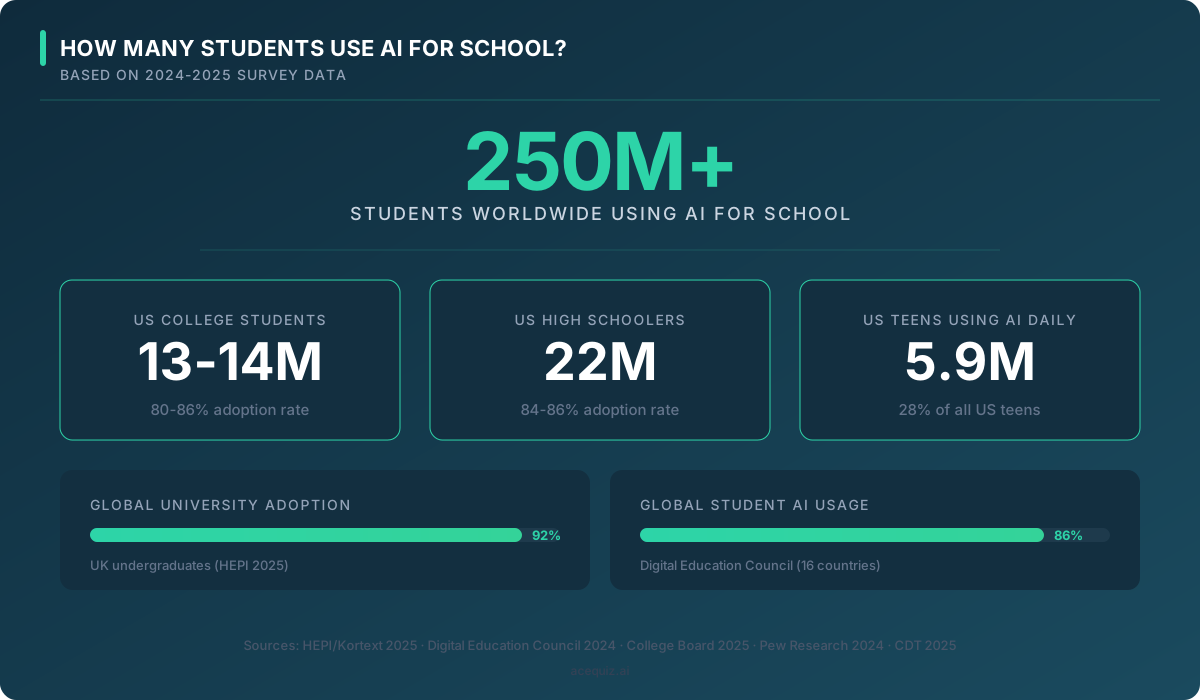
Globally, there are approximately 1.5 billion students enrolled in education worldwide. Based on the latest surveys showing 80-92% adoption rates in higher education and 54-86% in K-12, here's what that translates to:
College/University Students (approximately 235 million globally):
- 92% of UK full-time undergraduate students now use AI tools for their studies, roughly 2.3 million UK university students
- 86% of students globally are using AI, with more than half using generative AI tools weekly. That's approximately 200 million university students worldwide
- 80% of undergrads across 15 countries have used generative artificial intelligence to help with their university work
US Students Specifically:
- There are about 16.5 million college students in the US. With 80-86% using AI, that's roughly 13-14 million college students using AI
- There are about 26 million high school students in the US. With 84% using AI, that's approximately 22 million high schoolers using AI for schoolwork
- 64% of US teens (ages 13-17) use AI chatbots. Out of roughly 21 million teens, that's about 13.4 million American teenagers
- 28% use AI chatbots daily, approximately 5.9 million US teens using AI every single day
High School Students:
- 86% of high school students used artificial intelligence during the 2024-25 school year
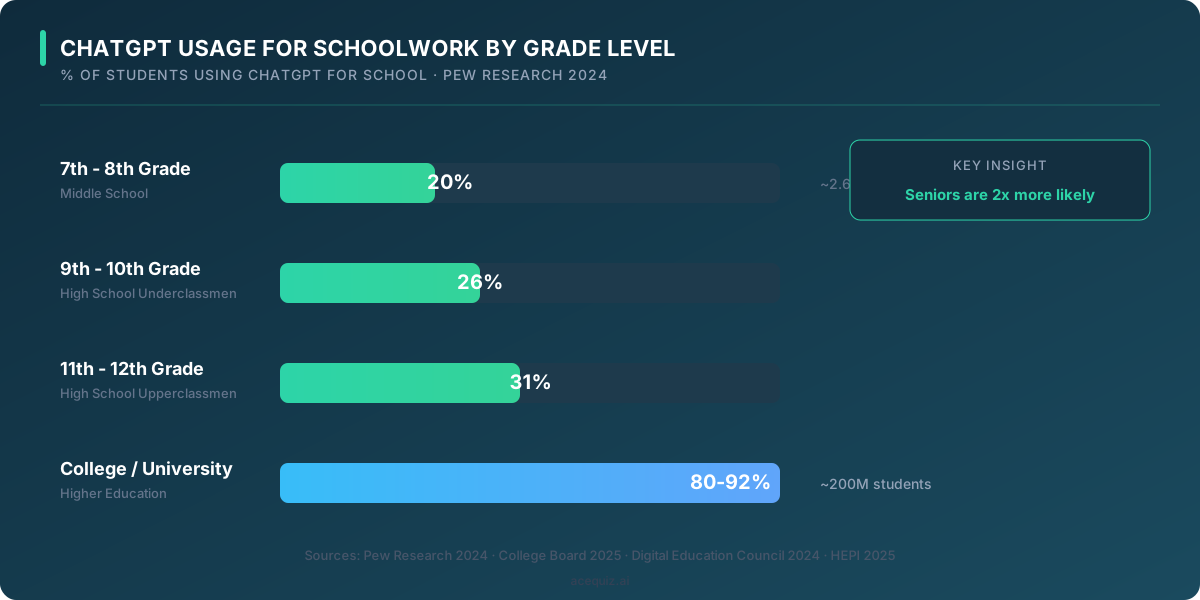
- About 20% of 7th and 8th graders use ChatGPT for schoolwork, roughly 2.6 million middle schoolers in the US alone
Bottom line: We're talking about 250+ million students worldwide actively using AI for school, with 35+ million in the United States alone.
Students are Adapting to the use of Artificial Intelligence
Here's the part that's kind of mind-blowing: look at how quickly AI use in education changed:
| What We're Measuring | Before | Now |
|---|---|---|
| UK students using any AI tool | 66% (2024) | 92% (2025) |
| UK students using AI for assignments | 53% (2024) | 88% (2025) |
| US teens using ChatGPT for school | 13% (2023) | 26% (2024) |
| US high schoolers using AI | 79% (Jan 2025) | 84% (May 2025) |
One researcher said it's "almost unheard of to see changes in behavior as large as this in just 12 months." This rapid AI integration into the learning process caught many higher education institutions off guard. For a deeper look at the upsides and downsides of this shift, check out our breakdown of the pros and cons of AI in education.
Students are using AI daily in school

The Digital Education Council surveyed 3,839 bachelor, masters, and doctorate students from 16 countries. Their findings show just how embedded AI technologies have become:
- Twenty-four percent reported using AI daily, while 54% use it weekly. That translates to roughly 57 million daily users and 127 million weekly users among university students globally
- Students use an average of 2.1 AI tools for their courses
- The rise in AI usage forces institutions to see AI as core infrastructure rather than just another tool
The Digital Education Council also found that higher education leaders need to effectively boost AI literacy to prepare students for an AI-driven world.
How AI can help students
Not everyone's using artificial intelligence the same way. Here's what the surveyed students reported:
Top uses:
- Looking stuff up / Research: 69% use AI to search for information
- Understanding hard concepts: 58% use it to have complex concepts explained
- Brainstorming and research ideas: About half of high school students use it for this
- Fixing grammar and editing: 42% use it for grammar checking
- Summarizing readings: 33% use AI to summarize documents and university textbooks
- Math help: 29% of teens use it for solving math problems, from basic algebra to calculus and beyond. AI quiz generators are also popular for math practice
- Writing essays: 18% use it for essay writing
Students also use AI tutors to get personalized support with difficult subjects and to save time on routine tasks and administrative tasks like organizing notes. Tools like AI homework helpers and AI flashcard generators have become go-to resources for students looking to study smarter, not harder.
Students are using ChatGPT in college
When it comes to which AI platforms college students and high schoolers prefer, it's not even close:
- 66% of students globally use ChatGPT. That's roughly 155 million university students using ChatGPT
- 69% of high school students use ChatGPT specifically for school assignments
- Grammarly and Microsoft Copilot come in second at 25% each
29% of students now turn to AI first when they're stuck. That's more than those who ask friends (15%) or check their course materials (14%). This shift shows how AI applications have become central to the learning process.
AI Student Usage by Grade Level
Older students use AI more (no surprise there):
- 11th-12th graders: 31% use ChatGPT for schoolwork
- 9th-10th graders: 26%
- 7th-8th graders: 20%
Seniors are nearly twice as likely as freshmen to use AI for things like brainstorming, editing essays, research, and explaining complex topics.
Teachers Are Using AI Too
It's not just students. 85% of teachers used AI in the 2024-25 school year. Faculty members across higher ed are finding AI helps with professional development and handling administrative tasks more efficiently. For the full breakdown, see our article on how many teachers use AI.
But here's the tension around AI policies:
- 38% of teachers let students use ChatGPT
- 10% have caught students using it when they weren't supposed to
The AI Literacy Gap
Despite all these students using AI, most don't feel adequately prepared to use AI systems effectively:
- 58% of students say they don't have sufficient AI knowledge and AI skills. That's about 136 million university students who feel unprepared
- 48% don't feel ready for an AI-enabled workplace or AI-enabled workforce
- Only 36% of UK students have received AI training from their university's integration programs
- Only 5% of students are fully aware of their institution's AI governance guidelines
This gap in AI competency is why 72% of students want their universities to offer greater AI literacy courses. Students learn best when they understand both the benefits and limitations of AI technologies.
Higher education leaders and higher education institutions need to involve students when creating AI policies and provide more training on AI ethics, AI governance, and responsible use of AI.
Cons of using AI for studying
Students agree they're worried about:
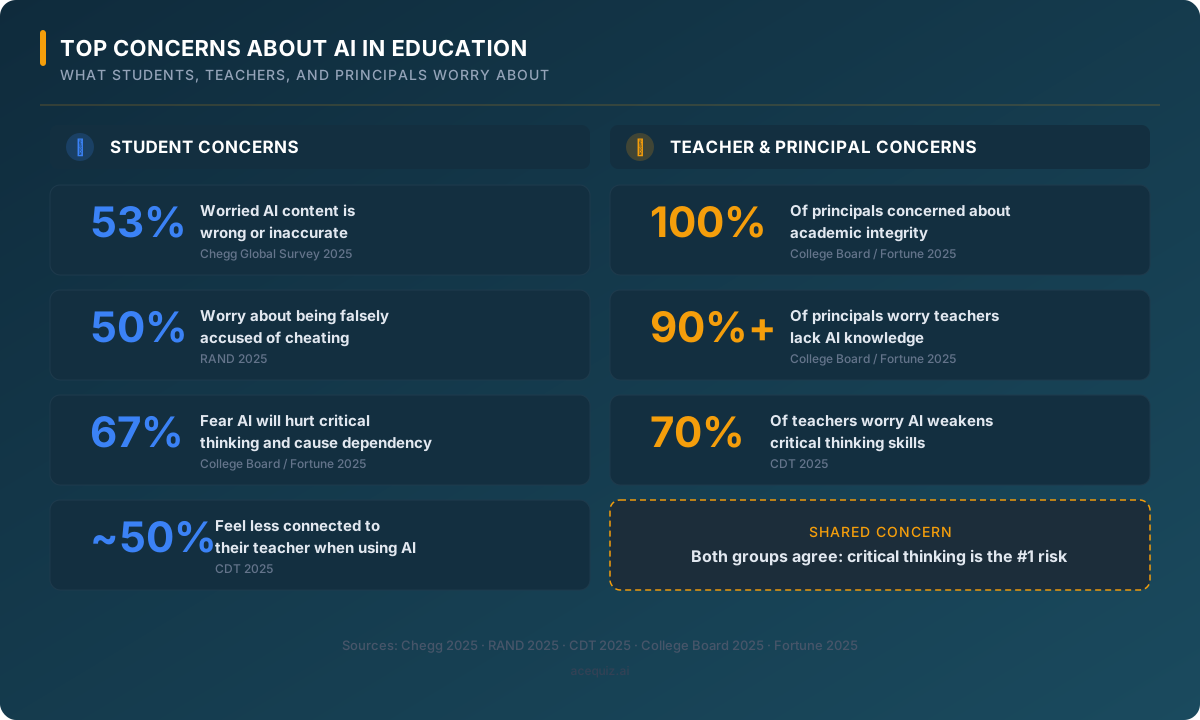
- 53% are concerned about AI-generated content being wrong or inaccurate
- 50% worry about being falsely accused of cheating and academic integrity violations
- Just under half feel that using AI in class makes them less connected to their teacher, affecting human interaction
- Two-thirds of high school students worry that using AI too much could hurt their critical thinking and make them "dependent"
- More than half believe over-reliance on AI will negatively impact their academic performance and academic success
Teachers and principals worry about AI's impact too:
- 100% of principals surveyed are concerned about academic integrity
- 70% of teachers worry AI weakens critical thinking and other important skills students need
- Over 90% of principals worry about whether teachers have sufficient AI knowledge for professional development
The Training Gap
Here's a problem with AI in education: most people are figuring this out on their own without proper AI literacy training:
- 80%+ of students say teachers never taught them how to use AI for schoolwork
- Only 5% of students are fully aware of their school's AI ethics guidelines
- 40% of faculty members feel they're just beginning their AI literacy journey
A Common Sense Media study found that 72% of US teens have used AI chatbots at least once (roughly 15 million teenagers), yet schools are still figuring out how students learn best with these AI models and AI applications.
Students Expection on AI

Students are clear about what would help with AI integration:
- 73% want universities to provide AI training for both faculty members and students
- 71% want to be involved when there are talks about AI integration in their institutions
- 69% say AI should be incorporated into their curriculum for future careers
- 50% want AI tools specifically designed for education that support social emotional learning
Benefits of Artificial Intelligence to Students
It's not all concerns. Students agree there are real benefits to using AI:
- 51% say the main reason they use AI is to save time
- 50% report improved understanding of complex concepts
- 49% say AI improved their ability to complete assignments
- 85% of high school students agree students can benefit from using AI to enhance learning and boost student engagement
The Bottom Line
AI is now a normal part of school life. Whether you're in middle school, high school, or higher education, the majority of your classmates are using AI tools, and that number keeps growing every month.
The numbers speak for themselves:
- 250+ million students worldwide are using AI for school
- 35+ million students in the US use AI for their studies
- 13-14 million US college students use AI regularly
- 22 million US high schoolers use AI for schoolwork
- 5.9 million US teens use AI chatbots every single day
The big questions now aren't really about whether students will use AI, but:
- How do we build AI competency and AI skills responsibly?
- How do schools create fair AI policies around academic integrity?
- How do we make sure AI supports critical thinking rather than replacing it?
- How can AI applications enhance the learning process and student engagement?
One promising approach is using AI-powered tools to practice specific subjects, like working through quadratic expression problems or long division with instant feedback and step-by-step solutions.
As one academic fellow in AI governance noted, higher education institutions must consider how to effectively boost AI literacy to equip both students and faculty members with the skills to succeed in an AI-driven world.
Quick Reference: All the Studies
Here's a new report roundup of the major surveys cited:
| Source | Sample Size | Key Finding |
|---|---|---|
| HEPI/Kortext 2025 | 1,041 UK undergrads | 92% use AI |
| Digital Education Council 2024 | 3,839 students (16 countries) | 86% use AI |
| Chegg Global 2025 | 11,706 undergrads (15 countries) | 80% use AI |
| College Board 2025 | 10,000+ high schoolers | 84% use AI |
| Pew Research 2024 | 1,391 US teens | 26% use ChatGPT for school |
| CDT 2025 | 1,030 students, 806 teachers | 86% of students use AI |
| RAND 2025 | National K-12 sample | 54% use AI for school |
TL;DR: Over 250 million students worldwide and 35+ million in the US are using AI for school. Around 80-92% of college students and 84-86% of high school students use AI tools. ChatGPT dominates among students. AI usage basically doubled in the last year. Everyone's still figuring out the rules around AI ethics, academic integrity, and how to effectively boost AI literacy for future careers in an AI-enabled workforce.